If you’ve been putting off starting an online business because you can’t decide between YouTube and writing a blog, you’re not alone. The YouTube or blog for beginners question trips up a lot of people, especially when you already work full-time and only have a few hours a week to spare.
The good news is you do not need to get this perfect. You just need to choose the format that best fits your time, energy and way of communicating. That matters more than picking the so-called best platform.
I’ve seen many people get stuck here for months, comparing tools and watching endless advice videos instead of building anything at all. In most cases, the smarter move is to pick one, keep it simple, and learn by doing.
YouTube or blog for beginners – what are you really choosing?
At first glance, it seems like a choice between video and writing. In practice, it is really a choice between two different ways of showing up online.
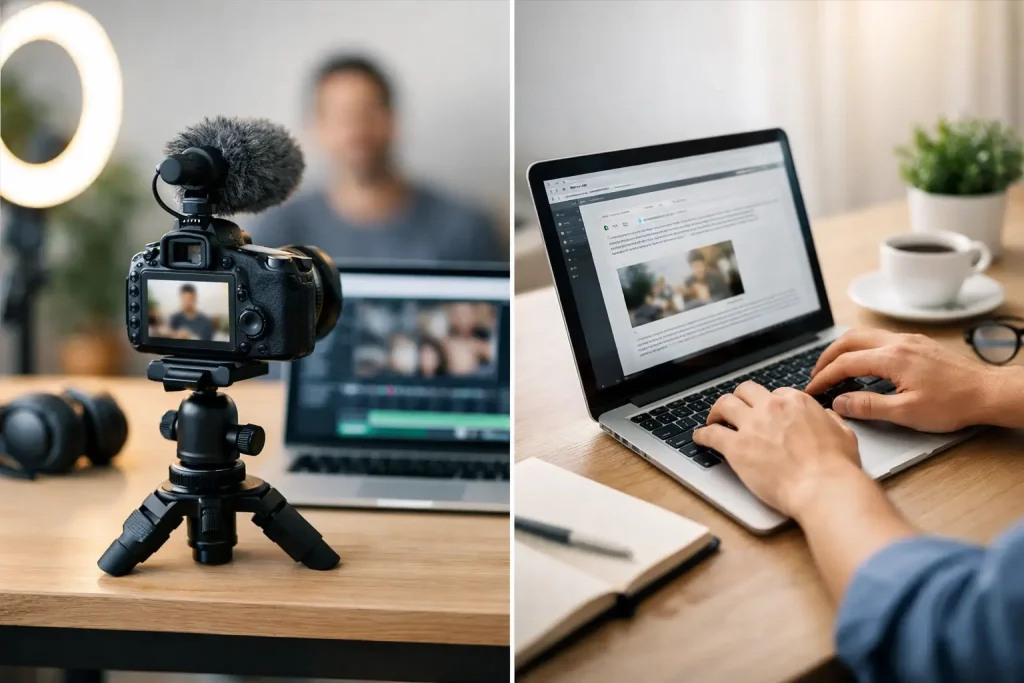
A YouTube channel asks you to speak, record, edit and publish consistently. A blog asks you to think clearly, write clearly and structure information in a way that helps someone solve a problem.
Both can work. Both can lead to a real online business. Both can help you build trust, create useful content and eventually recommend products, services or training that genuinely help people.
What makes the decision difficult is that each platform has strengths and trade-offs. If you are over 40, busy with work and family, and not especially technical, those trade-offs matter.
Start with the one you can keep doing
Beginners often ask which platform grows faster. A better question is which one you can still see yourself doing six months from now.
That is where many good intentions fall apart. YouTube can be powerful, but it often takes more energy per piece of content. Even a simple video usually means planning, filming, re-recording, basic editing, titles, thumbnails and uploading. If you are doing this after work, tired, that extra friction can become the reason nothing gets published.
A blog is often calmer to manage. You can write in shorter sessions. You can stop halfway through and come back tomorrow. You do not need lighting, a microphone setup or confidence on camera. For many beginners, that lowers the barrier enough to actually start.
That said, some people find writing far more draining than speaking. If you can talk naturally, explain things well and don’t mind being on camera, YouTube may feel easier than staring at a blank page.
Simple beats complex. The right option is usually the one that fits your real life, not the one that looks more exciting online.
When a blog is the better starting point
For many full-time workers, a blog is the steadier place to begin. It gives you room to think, improve and publish useful content without the pressure of performing.
A blog also works well if you like answering practical questions. You can create articles around topics people are already searching for, which means your content may keep bringing in visitors long after you publish it. That is helpful when your available time is limited.
Another advantage is that blogs are easier to update. If your advice changes or you want to improve an article later, you can simply edit it. With video, updates are less tidy.
From my own years working with websites, I’d say this is one of the most overlooked benefits of blogging – it gives beginners a quieter way to build skill and confidence over time.
A blog may suit you if:
- you prefer writing to speaking
- you want a lower-tech starting point
- you need flexibility around work and family
- you like teaching through clear explanations
- you want content that can be refined as you learn
If that sounds like you, blogging is not the boring option. It is often the sustainable option.
When YouTube makes more sense
YouTube can be an excellent choice if your personality comes through better when you speak. Some people can explain an idea in five minutes on camera that would take them two hours to write.
Video also builds familiarity quickly. People hear your voice, see your face and get a feel for whether they trust you. That can be useful if your long-term plan involves teaching, reviewing, demonstrating or building a personal brand.
It is also worth saying that YouTube does not have to mean polished production. Beginners often imagine they need a studio setup or advanced editing skills. You do not. Clear audio, useful information and a calm, straightforward style go a long way.
Still, there is a trade-off. Video tends to ask more of you emotionally. Being on camera can feel awkward at first. Editing can eat up time. If that friction causes you to avoid publishing, the platform becomes a burden rather than an asset.
It’s simpler, and slower, than it looks from the outside.
Blog or YouTube for beginners who are not technical
If you are not technical, both options are still open to you. The trick is to avoid turning either one into a complicated project.
For a blog, you only need a simple website, a clear topic and basic articles that help people. You do not need fancy design, custom coding or complicated systems.
For YouTube, you only need a basic recording setup and a willingness to learn a few straightforward steps. You do not need cinematic intros, flashy graphics or advanced editing software.
I made this mistake early on with websites – I spent too much time fiddling with setup instead of focusing on useful content. Most beginners do better when they ignore the extras and publish something helpful first.
A practical way to choose this week
If you are still unsure, do not solve it in theory. Test it.
Spend one week creating a short blog post and one week creating a short video on the same topic. Keep both simple. The point is not to impress anyone. The point is to notice what felt more natural, what took less effort to finish, and what you would be willing to repeat.
Ask yourself a few honest questions. Did writing feel clear or painful? Did speaking feel natural or forced? Which one fitted better into your schedule? Which one would you still do after a long workday?
That last question matters more than most people realise. Quiet progress works. The platform you can continue with is usually the platform that wins.
You do not need to build on both at once
A common beginner mistake is trying to start a blog, a YouTube channel, a newsletter and three social accounts all at the same time. That usually leads to half-finished content and a lot of frustration.
Start with one main platform. Learn how to create useful content there. Get comfortable showing up consistently. Once that feels manageable, you can reuse your ideas elsewhere.
For example, a blog post can later become a video topic. A video can later be turned into an article. But trying to do both from day one often adds pressure you do not need.
Small steps add up, especially when you are building around a job.
What matters more than the platform
The real difference between people who eventually build something worthwhile and those who stay stuck is not whether they picked blogging or YouTube. It is whether they chose a clear audience, solved real problems and kept going long enough to improve.
If your content helps a specific person with a specific issue, either platform can work. If your content is vague, inconsistent or built around what you think the algorithm wants, neither platform will feel satisfying for long.
So before you obsess over format, get clear on these basics. Who are you trying to help? What are they struggling with? What can you explain simply from your own experience or growing knowledge?
You do not need to be an expert to begin. You only need to be useful and honest.
The best choice for most beginners
If I had to give one practical answer to the YouTube or blog for beginners question, it would be this: start with a blog if you want the simpler path, start with YouTube if speaking feels far more natural than writing.
For many full-time workers over 40, a blog is the easier starting point because it is flexible, searchable and less demanding to produce. For others, YouTube is the better fit because it suits how they communicate and helps them build connection faster.
Neither choice locks you in forever. You can go slower. You can change direction later. What matters is getting past indecision and building something real.
If you want a calmer, step-by-step explanation of how online business actually works and how to choose a model that fits around your life, you can watch the free video series at Avallach Technology. It is designed for beginners who want a straightforward path without hype or technical overwhelm.
Pick the format you can live with, not the one that flatters your ambitions. That is often where meaningful progress starts.